
First Break Drilling Tools
Excellent quality and value for money consumables
Rock drilling tools are specialized mechanical instruments designed to bore through hard geological formations in industries like mining, construction, and quarrying. The most common assemblies rely on rotary-percussive action, combining a heavy-duty drill string—made of hollow steel rods—with a hardened drill bit that crushes rock upon impact.
Depending on the rock's hardness and the required hole depth, operators choose between top-hammer systems, where impact energy travels down the rods from an external drifter, and down-the-hole (DTH) hammers, which place the striking piston directly behind the bit for greater efficiency in deeper holes. Modern drill bits typically feature tungsten carbide inserts—either as chisels or spherical buttons—to withstand extreme abrasion and high-impact forces, while compressed air or water flushes rock cuttings out of the borehole to prevent jamming and keep the equipment cool.
Top hammer drilling tools
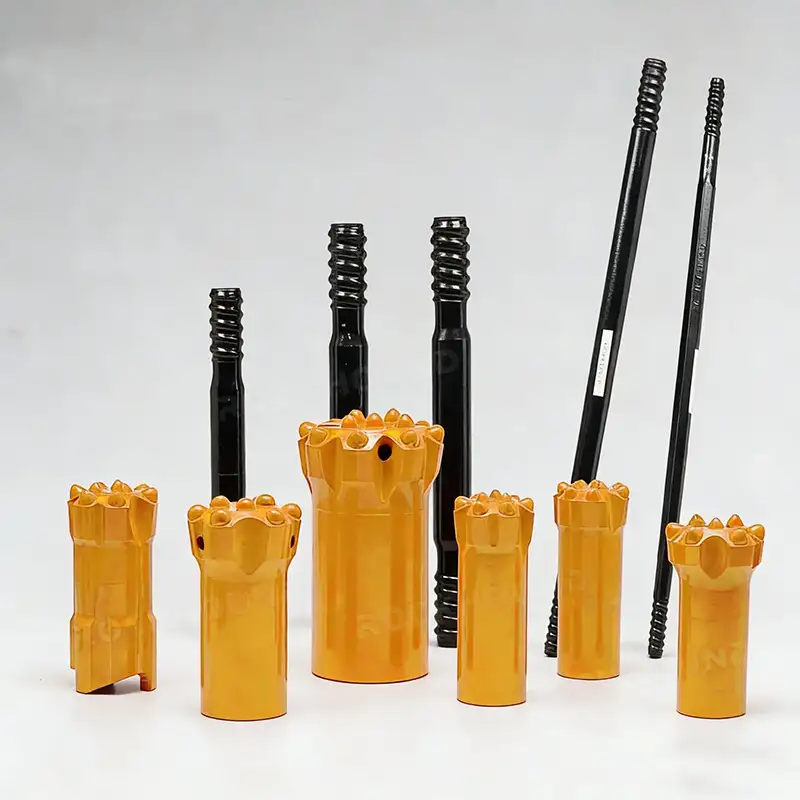
Top hammer rock drilling tools form a complete drill string—typically made up of a shank adapter, drill rods, coupling sleeves, and a carbide-tipped drill bit—that transfers percussive impact and rotational force from a surface rock drill into hard rock. High-frequency strikes (often 2,000 to 5,000 blows per minute) combined with continuous rotation fracture the rock, while pressurized air or water flushes cuttings out through the hollow rods to keep the borehole clean. Commonly used in mining, quarrying, tunneling, and construction for blast holes, anchoring, and shallow-to-medium boreholes, these tools come in standard thread profiles (such as R and T series) and bit geometries matched to rock hardness and abrasiveness.
Down-the-hole drilling tools
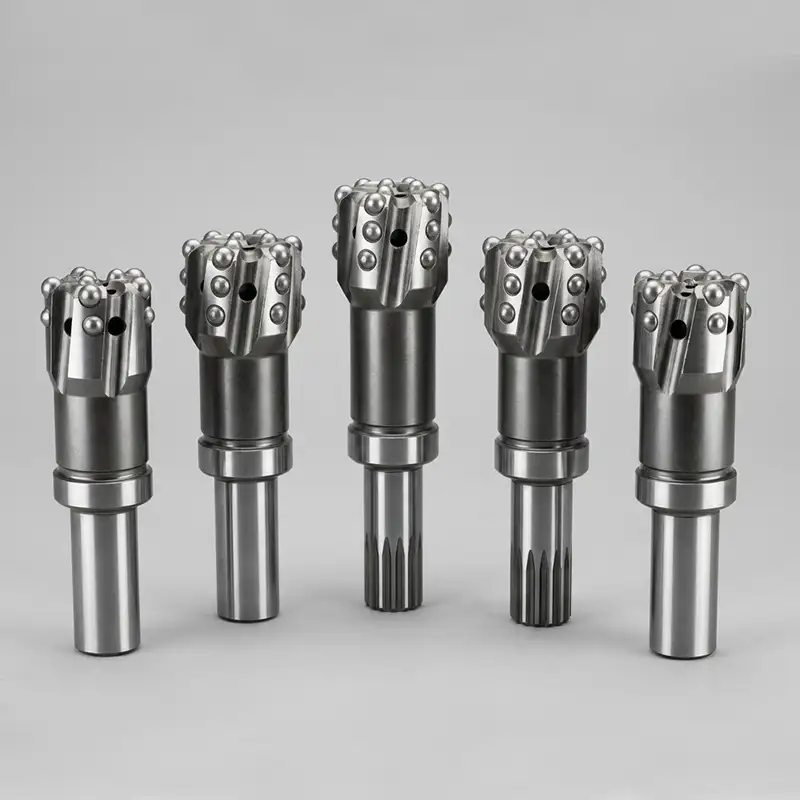
Down-the-hole (DTH) rock drilling tools consist of a percussion hammer, a drill bit, and a string of hollow drill pipes that work together to break hard rock efficiently. Unlike top-hammer drills that send impact energy down a long rod, a DTH hammer sits directly above the bit at the bottom of the hole, using pressurized fluid—most commonly compressed air, or occasionally water or drilling mud—to drive an internal piston that strikes the bit repeatedly.
As the drill pipes transmit rotation and downward feed force from the rig, the carbide-tipped bit crushes the rock while exhausting air or fluid flushes cuttings out of the borehole, maintaining consistent penetration rates across mining, water well, and construction projects.
Rotary drilling tools
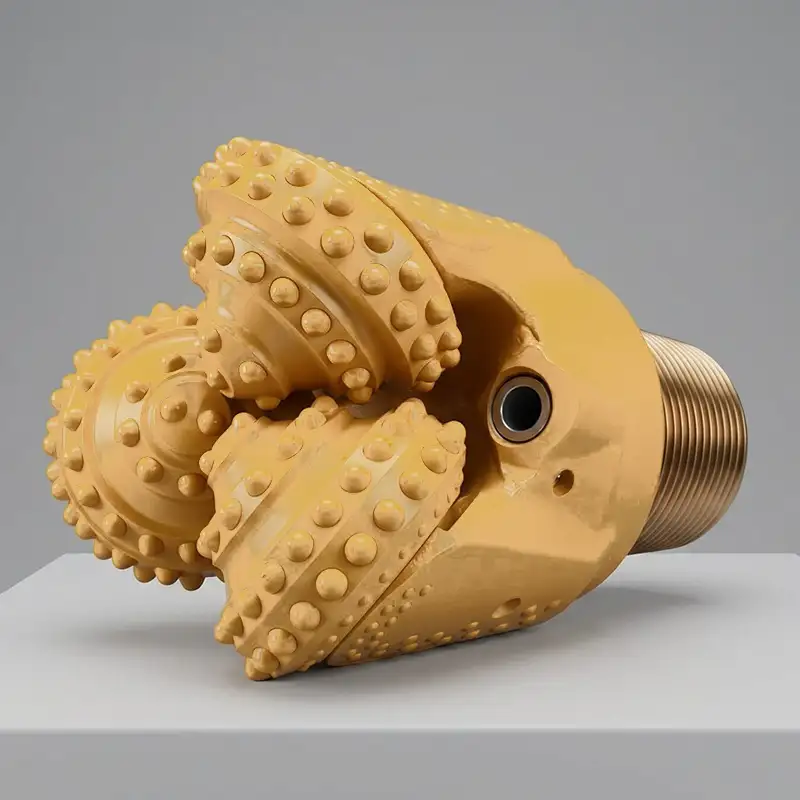
Rotary rock drilling tools work together as a drill string to transmit rotational torque and downward force from a surface rig into the rock formation while clearing cuttings from the borehole. Key components include drill bits—such as tricone roller bits, polycrystalline diamond compact (PDC) bits, or drag bits—that crush, shear, or grind rock depending on hardness and ground conditions.
Connected behind the bit are heavy-walled drill collars and hollow drill pipes with threaded tool joints that apply weight, maintain alignment, and channel drilling mud, water, or compressed air down to cool the bit and lift rock fragments to the surface, often aided by stabilizers and deck bushings to reduce hole deviation and wear.
Raiseboring tools
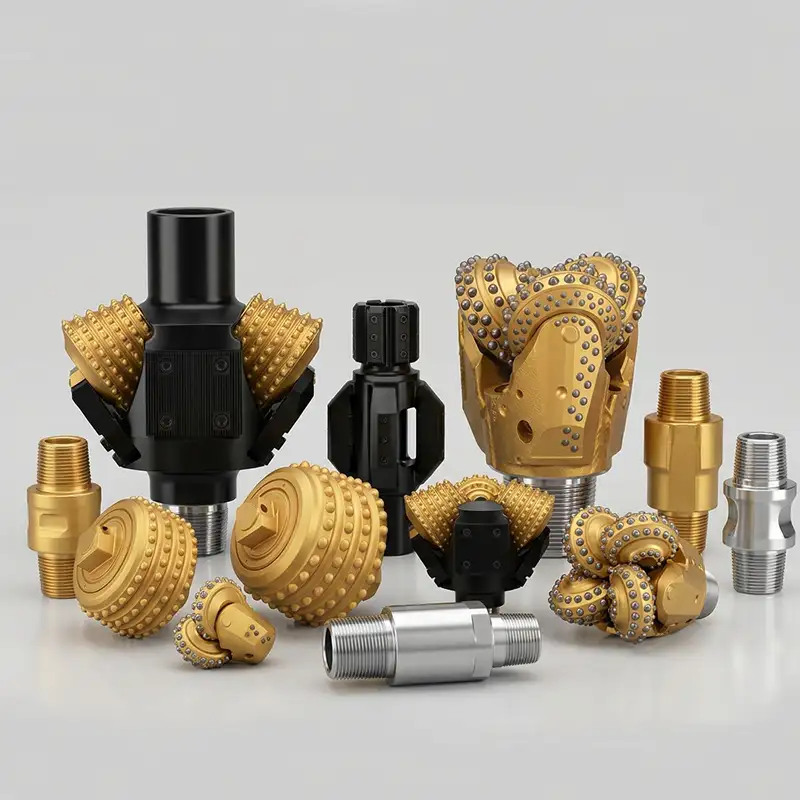
Raiseboring rock tools are heavy-duty mechanical excavation instruments used in underground mining and civil tunneling to bore circular shafts between two levels without the need for blasting.
The process relies on a raiseboring machine that first drills a small-diameter pilot hole downward using a tricone roller bit, which is then replaced at the lower level with a massive, disc-shaped reamer head equipped with replaceable tungsten carbide insert (TCI) cutters. As the machine rotates and pulls the reamer upward under immense hydraulic thrust, these rolling cutters crush and chip away the surrounding rock face, allowing the excavated muck to fall cleanly by gravity to the lower level for easy removal.
HDD drilling tools
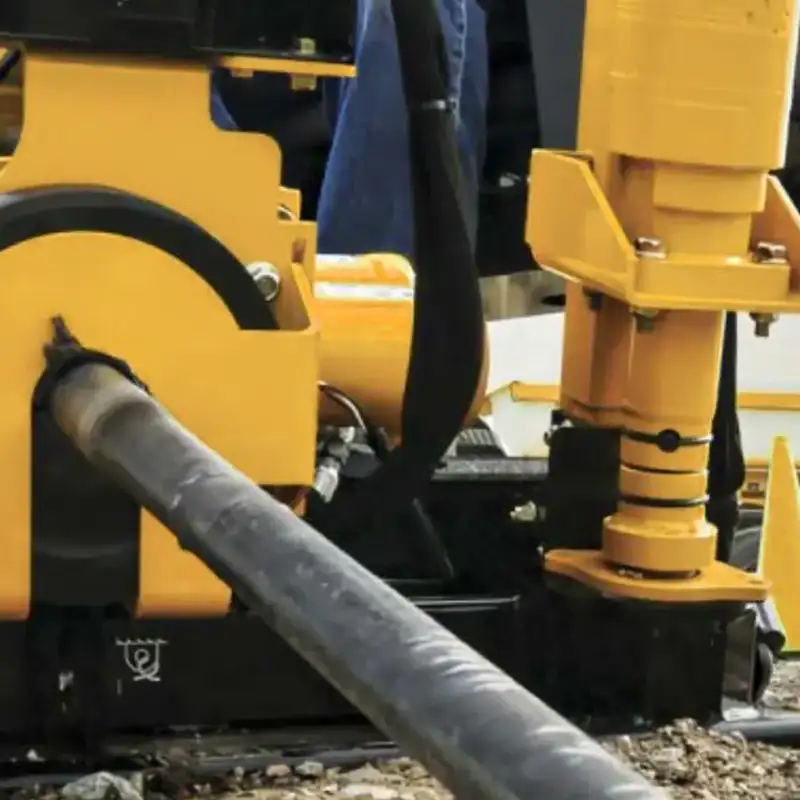
Horizontal directional drilling (HDD) tools form the essential downhole assembly used to install underground utilities without open-cut trenching. The process begins with flexible drill pipes connected to a drill head and pilot bit—such as a fishtail, roller cone, or PDC bit—which cuts through soil or rock while a transmitter (sonde) housing tracks the bore path.
Once the pilot hole reaches the exit point, the bit is replaced with a back reamer (such as a flycutter, barrel reamer, or rock hole opener) to enlarge the tunnel to the required diameter. During the final pullback stage, a swivel is attached between the rotating reamer and the utility pipe to prevent torsional stress from twisting the new conduit as it is pulled into place.
Hand held rock drills
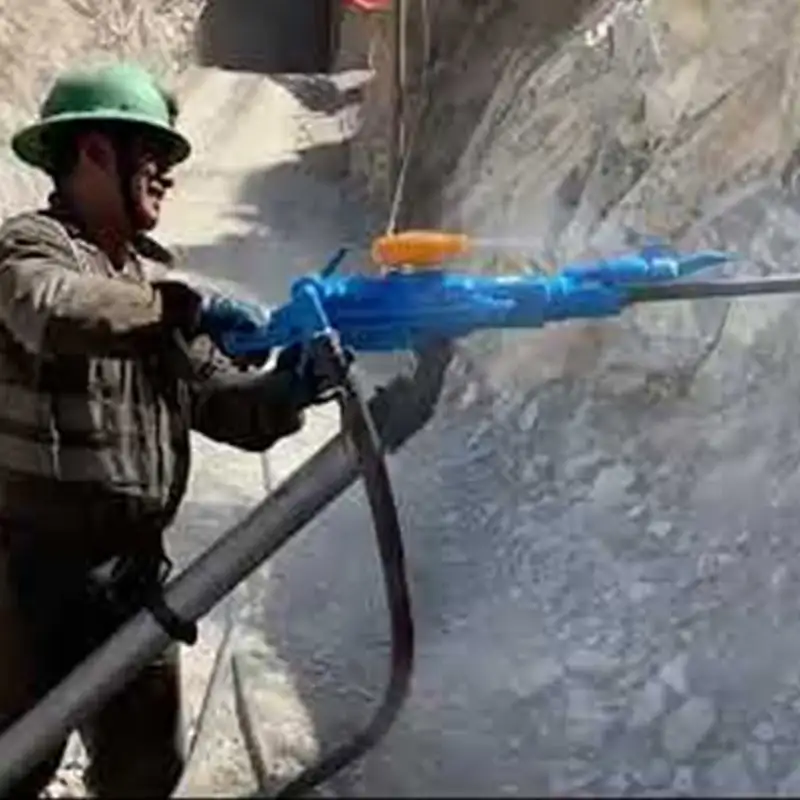
A handheld rock drill (commonly known as a jackleg drill, sinker drill, or pneumatic rock drill) is a portable, heavy-duty percussion tool designed to bore holes into hard stone, concrete, and rock surfaces for blasting, anchoring, or splitting. Powered primarily by compressed air—though hydraulic, gasoline, and electric models are also widely used—the machine operates by rapidly hammering a rotating tungsten-carbide drill bit against the rock face while simultaneously flushing out dust and debris with air or water.
Because of their compact size and maneuverability, these drills are essential in underground mining, quarrying, tunneling, and civil construction where larger, rig-mounted machinery cannot easily reach. While cost-effective and versatile for small-scale or precision work, operating a handheld rock drill is physically demanding and requires strict adherence to safety protocols to manage intense vibration, high noise levels, and silica dust exposure.
Rotation units
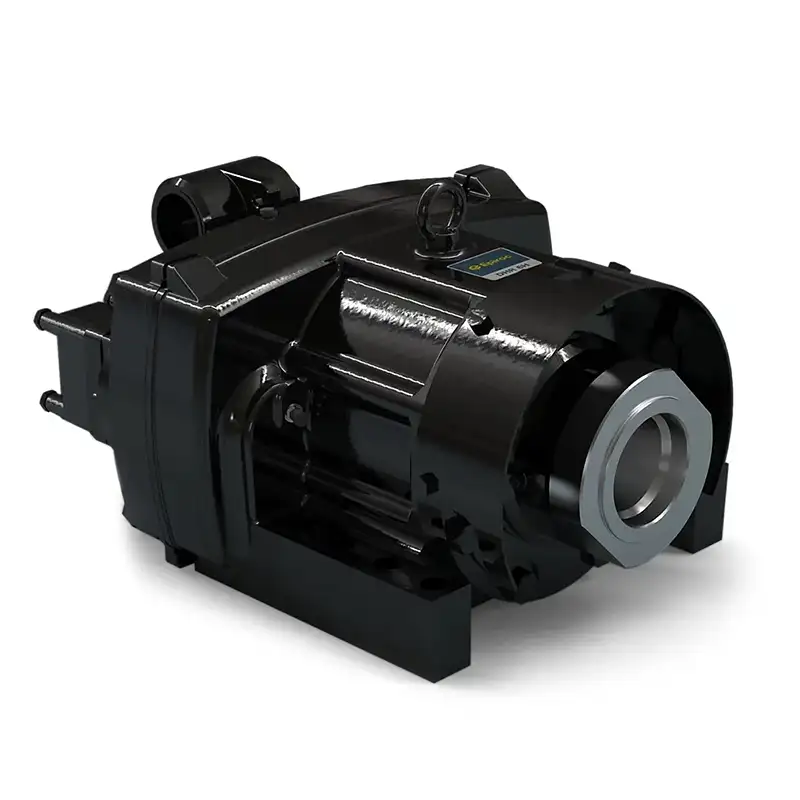
A generic rotation unit for rock drilling is a heavy-duty mechanical assembly—typically powered by a hydraulic motor or a high-torque electric drive—that provides the rotational force required to turn a drill string and bit into hard rock formations. Mounted on a drill rig's mast or feed beam, these modular units transfer torque through a series of reduction gears to a drive spindle or chuck, which accommodates various drill pipe threads and tooling sizes.
Built to withstand extreme axial loads, intense vibrations, and abrasive dust, generic rotation units often feature integrated swivel connections to channel flushing media like air, water, or drilling mud directly through the drill string to cool the bit and clear rock cuttings from the borehole. Because they are designed with standardized mounting interfaces and adaptable speed-to-torque ratios, they serve as versatile, replaceable components across different rig brands for applications ranging from mining and quarrying to geotechnical exploration and water well drilling.
Machine-mounted rock drills
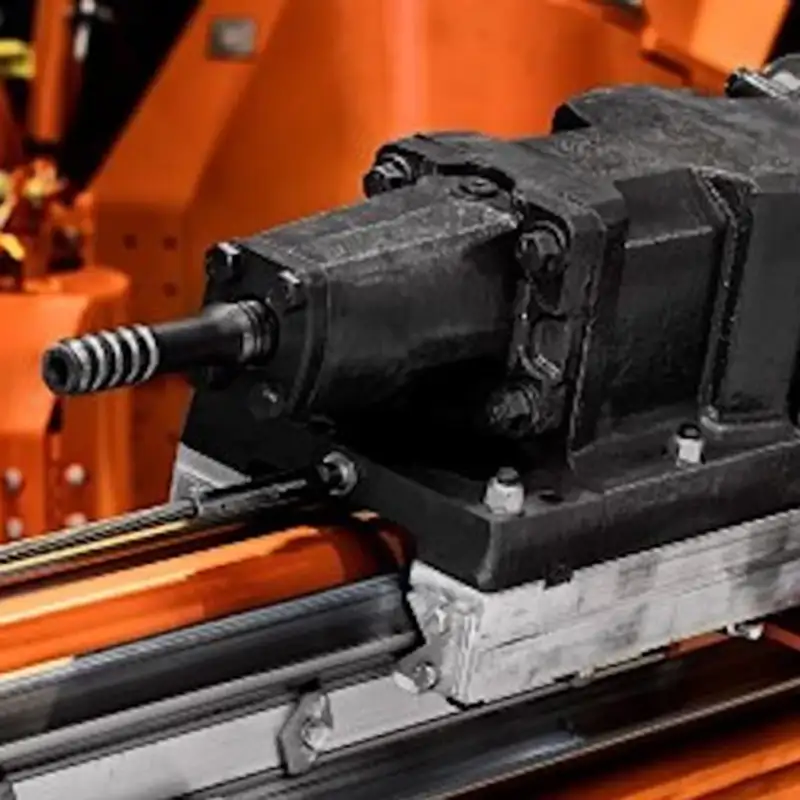
Machine-mounted rock drills attach to carriers such as excavators, crawler rigs, or jumbo drills to bore blast, anchor, and excavation holes into hard rock. Powered primarily by hydraulic or pneumatic systems, these units combine impact force, rotational torque, and a feed beam or boom to hold steady pressure against the rock face.
Compressed air or water flushes rock cuttings out of the borehole as the drill bit advances, improving penetration speed and reducing operator strain compared to handheld tools.